Yezdi Motorcycles: From Ideal Jawa Legends to the 334cc Adventure Era
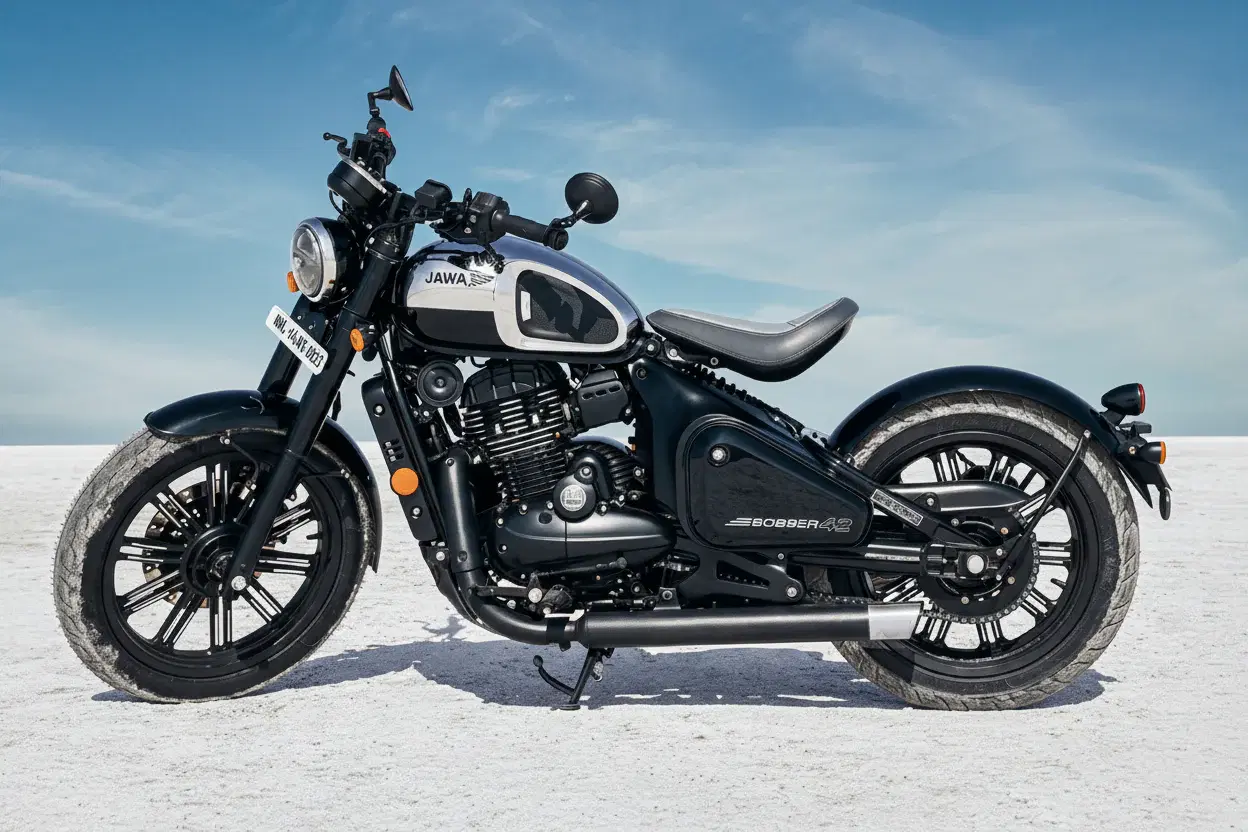
Yezdi: History and Revival
Origins and Key Models
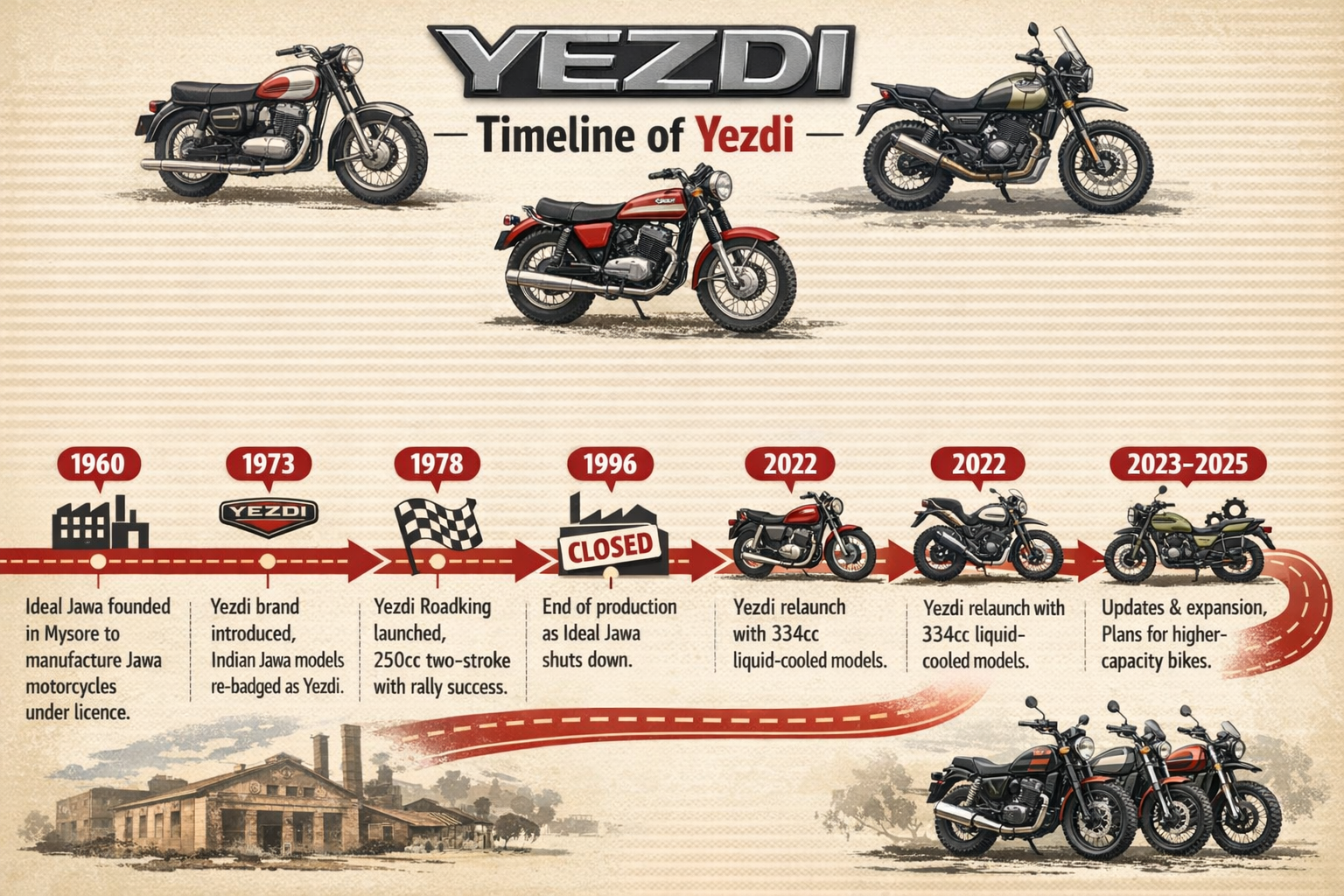
Yezdi’s story starts with Ideal Jawa India Ltd in Mysore, founded in 1960 by the Irani family to build Jawa motorcycles under licence from the Czech brand. In 1973, the Indian‑made Jawa models were rebranded as Yezdi, a name inspired by the Iranian city of Yazd.
Through the 1970s and 80s, Yezdi became known for tough, simple two‑stroke singles that could handle Indian roads and rack up big mileages. Riders loved them for their ruggedness, distinctive exhaust note and the feeling that you could fix most issues with basic tools. Popular models included the Oilking, Roadking, CL II, B/Deluxe 250s, and the bigger 350‑class Deluxe and Monarch.
The Yezdi Roadking (around 1978–96) is probably the best‑remembered of the lot. It used a 250 cc air‑cooled two‑stroke single with twin exhausts, a four‑speed gearbox and a clever combined gearshift/kick‑start lever, along with a semi‑automatic clutch that made it quirky but fun to ride. Yezdi also exported to several markets in Africa and Latin America, and at its peak (along with Jawa) held a meaningful slice of India’s leisure motorcycle segment.
Market Impact and Decline
For a long time, Yezdi was the go‑to brand if you wanted something a bit sportier and more characterful than a pure commuter. That started to change in the late 1980s and early 1990s. Fuel prices rose, emission norms tightened, and Japanese‑origin four‑stroke machines from brands like Honda and Yamaha suddenly made the older, heavier, less efficient two‑strokes look dated.
Ideal Jawa struggled to transition quickly to modern four‑stroke engines while also dealing with labour trouble and increasing regulatory pressure. As pollution norms ramped up and competitors offered cleaner, smoother bikes with better fuel economy, Yezdi sales eroded. Production eventually stopped in 1996 and the company went into liquidation, turning surviving Yezdi motorcycles into cult classics and future collectibles rather than everyday transport.
Revival under Classic Legends
The Yezdi name didn’t stay dormant forever. Mahindra, through its subsidiary Classic Legends (which also handles Jawa and BSA), moved to bring these old names back into the modern era. After relaunching Jawa in 2018, Classic Legends turned to Yezdi. In January 2022, the Yezdi brand was officially reintroduced in India with three new models: Roadster, Scrambler and Adventure.
All three were styled with a nod to the past but engineered for current expectations. At launch they shared a 334 cc, liquid‑cooled, single‑cylinder four‑stroke engine (derived from Jawa’s platform) with around 29–30 bhp and just under 30 Nm, paired with a six‑speed gearbox. The Yezdi Adventure, for example, makes roughly 29.6–30.2 bhp and 29.8–29.9 Nm depending on tune and update, and adds longer suspension travel, spoked wheels and a more off‑road‑oriented stance.
Electronics and equipment are very much up to current market expectations: fuel injection, LED lighting, a digital cluster with tripper‑style navigation on higher trims, and a slip‑and‑assist (slipper) clutch on many variants. Pricing at launch was positioned slightly above equivalent Jawa models and below most premium European options, roughly in the ₹2.1–2.3 lakh ex‑showroom band depending on model and city.
Since 2022, Yezdi has iterated on this formula. The Roadster and Scrambler have seen tuning and small feature updates, while the Adventure has received “2.0”‑style facelifts with revised gearing and other detail tweaks. The company has also talked about moving to larger‑capacity platforms in the 400–450 cc range in the mid‑term, to sit alongside and above the current 334 cc bikes. Sales so far are modest compared to giants like Royal Enfield, but the brand clearly taps into nostalgia and attracts riders who want something a bit different from the mainstream.
Iconic Models and Specifications
Legacy Yezdis (1970s–90s)
Yezdi Roadking (1978–96)
250 cc air‑cooled two‑stroke single with twin exhausts, around 17 hp, 4‑speed gearbox and a distinctive combined shift/kick lever with a semi‑automatic clutch. It earned a reputation in rallies and on rough roads for being tough and relatively quick for its time.
Yezdi CL II (early 1980s)
250 cc two‑stroke motor with a 5‑speed gearbox and stronger output than earlier CL models (period figures suggest a bit over 20 hp), plus cosmetic touches like distinctive tank paint and chrome. Exact numbers vary by source, but it was considered one of the sportier Yezdis.
Yezdi Deluxe / Monarch / 350‑series models
The larger‑capacity Yezdis used 350‑class engines tuned for more torque and slightly higher top speeds, often with 5‑speed gearboxes and changes like CDI ignition on later versions. They were the range toppers and are even rarer to find in clean condition today.
Yezdi 175
A smaller 175 cc two‑stroke single intended as a lighter commuter option. It never sold in the same numbers as the 250s and 350s, but it has its own niche following among collectors.
Because these bikes were built in a different era, published power figures are approximate and often come from period brochures or enthusiast documentation rather than the kind of detailed spec sheets we see today.
Modern Yezdis (2022–present)
- Yezdi Roadster
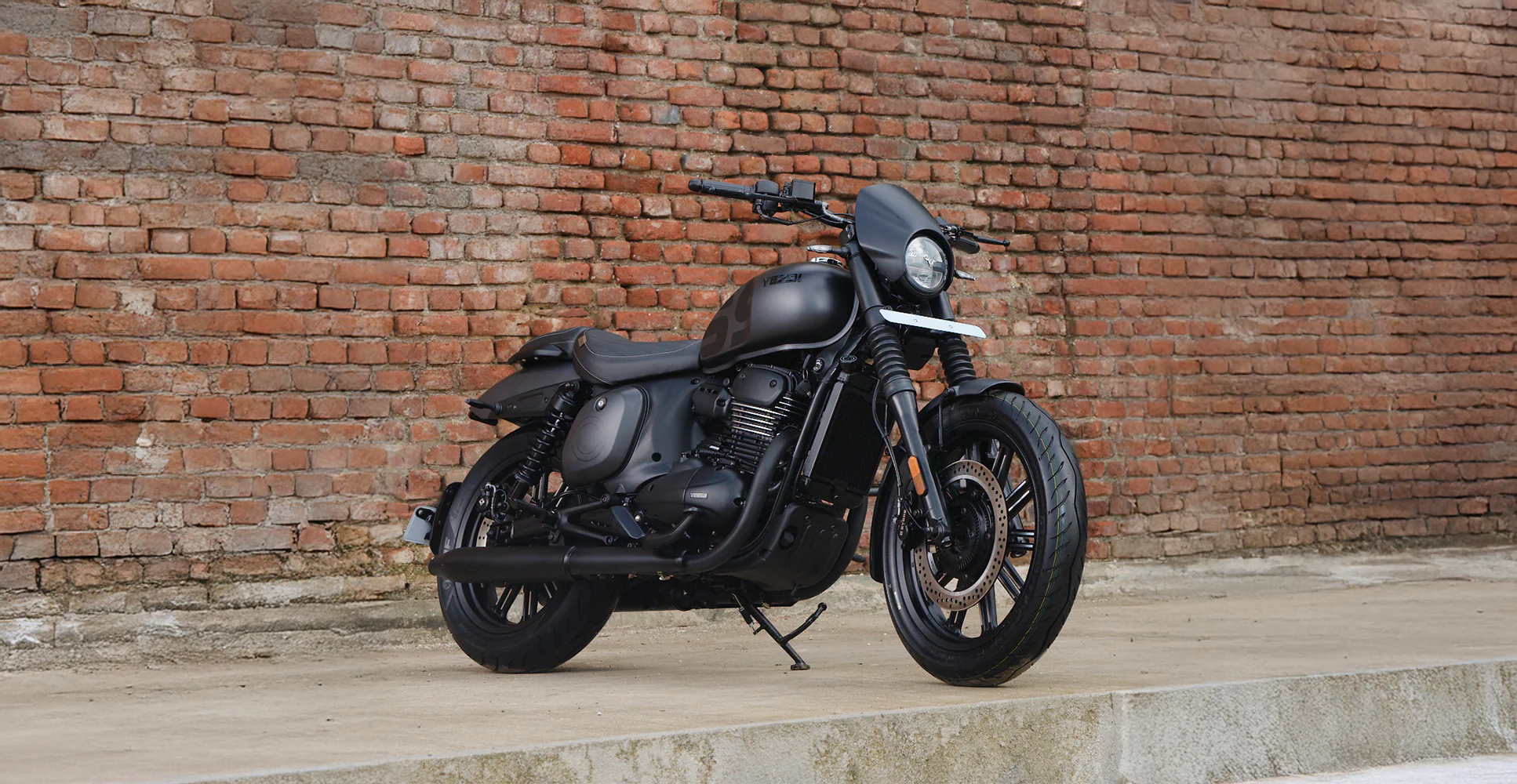
A retro‑styled roadster powered by a 334 cc liquid‑cooled single. Depending on update and tune, it makes roughly 28–30 bhp and just under 30 Nm, with a 6‑speed gearbox. It targets riders who want a modern‑classic look with a slightly sportier stance than a pure cruiser.
- Yezdi Scrambler
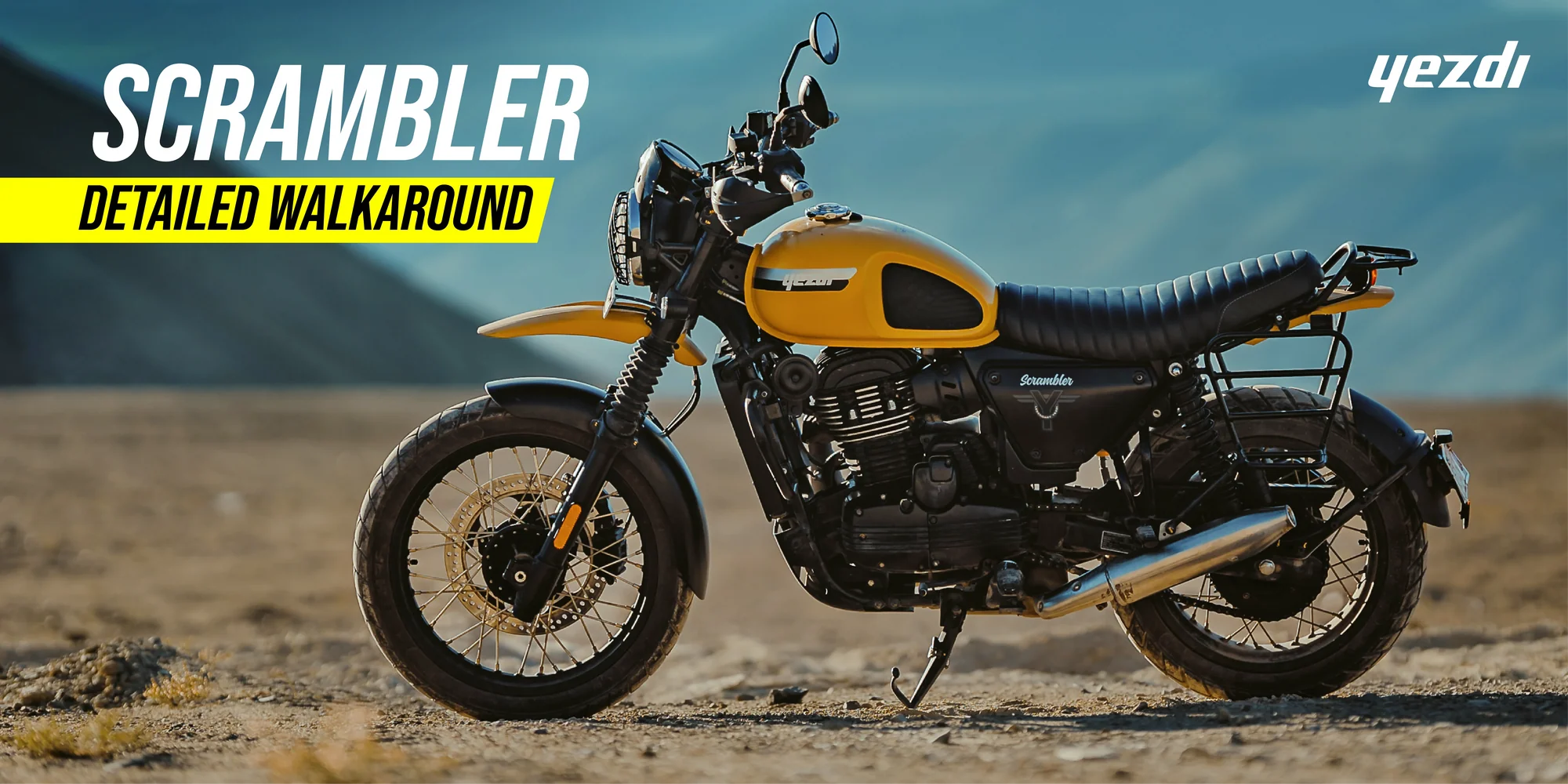
Shares the same 334 cc platform but tuned slightly differently, with power in the high‑20s bhp and torque around the high‑20s Nm range. It gets a more upright riding position, slightly longer‑travel suspension and semi‑knobbly tyres, making it more playful on bad roads and light trails.
- Yezdi Adventure
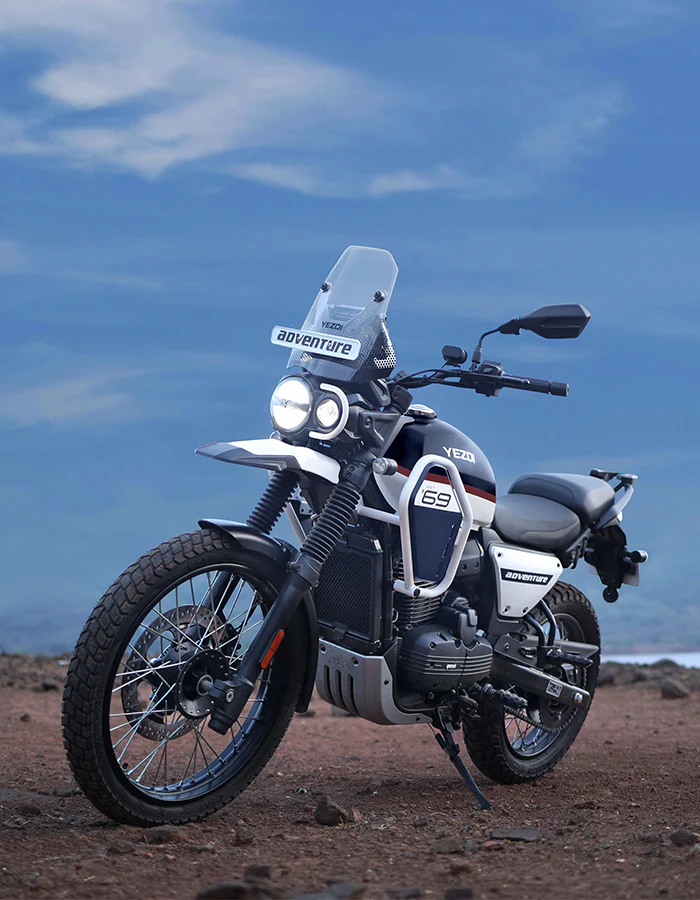
The adventure‑tourer of the family. It also uses the 334 cc liquid‑cooled engine, typically tuned to around 29.6–30.2 bhp and about 29.8 Nm, paired with a 6‑speed box. It adds longer suspension travel, a tall stance, spoked wheels, luggage‑friendly racks and multi‑mode ABS (with an off‑road mode that lets you loosen the rear).
- Updated / future engines
Over time, Classic Legends has revised the fuelling and gearing on these bikes, and there is active work on next‑generation platforms in the ~400–450 cc space that are expected to underpin larger Jawa, Yezdi and possibly BSA models.
Comparison and Positioning
Back in the day, Yezdis were seen as lighter and sportier than Royal Enfields, with sharper responses but less low‑end thump. The modern Yezdi range keeps some of that spirit. Today’s Yezdi Roadster, Scrambler and Adventure sit slightly below Royal Enfield’s 350s in outright torque and brand presence, but above many 200–250 cc commuters in performance and style.
For example, the Adventure’s ~30 bhp engine competes more with things like the Hero Xpulse 200/250 and entry‑level KTM Adventure/Duke models than with big‑single REs, and its kerb weight (around 185–190 kg) helps it feel a bit more manageable than some heavier rivals. Reviewers frequently point to the combination of “roughly 30 hp, 6‑speed gearboxes and fairly nimble handling” as the core of the package.
In terms of image, Yezdi leans heavily on nostalgia – many buyers have a family connection to the old bikes – but the execution is more tech‑forward than purely retro. LED lighting, digital consoles, USB charging and Bluetooth‑enabled navigation all feature prominently. The main challenges now are less about concept and more about execution: consistent build quality, long‑term reliability, and building out a strong service network to stand alongside bigger players.
If Classic Legends can steadily improve those areas while continuing to tap into the emotional pull of the name, Yezdi has a real chance to grow beyond its current niche and become a serious alternative for riders who want something with history but don’t necessarily want to follow the Royal Enfield crowd.
Download the MYTRA App!
Login and get 500 points, redeem these points for epic discounts.
Buy & Sell Bikes on MotoResell
India's trusted platform to buy and sell used motorcycles and accessories — fast, free, and community-driven.
Comments
No comments yet. Be the first to share your thoughts!